
CRPS
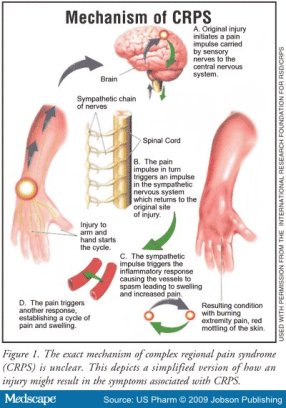
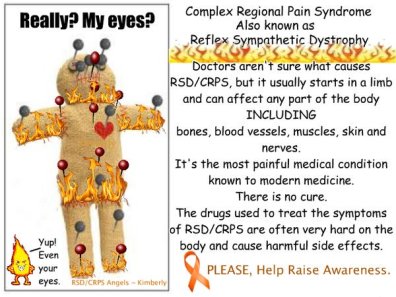
CRPS, Complex Regional Pain Syndrome, also previously known as RSD, Reflex Sympathetic Dystrophy, is a form of chronic pain that usually affects a person’s limbs but can spread to other parts of the body over time. (CPS, Chronic Pain Syndrome, is a more general term used for patients who have chronic pain but don’t fit into the CRPS category.) The exact cause of CRPS, why one person develops it over another, is unknown. At this point in time, CRPS, which carries the nickname of the “suicide disease,” is explained by a person’s nervous system continuing to send false amplified pain signals to their brain after an acute illness, injury, or form of trauma. The condition cannot be “cured,” but the ultimate hope is that if one keeps moving, the pain will reduce over time.
Since CRPS is more of an umbrella term for chronic nerve pain rather than a specific diagnosis, some patients may experience a few different symptoms than another. While part of my desensitization therapy at the pain program I attended was to put my feet in warm water for 2 minutes at a time, another patient’s physical therapy program included swimming in the pool because it was one of her favorite forms of exercise. For me, the warm temperature of the water (and water in general) causes my foot to go numb, burn, and get a tingling sensation for a period of time after I get out. But for her, swimming was an enjoyable form of exercise that was easier than land exercise.
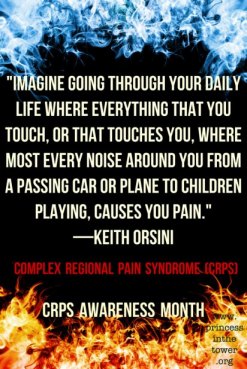
However, the majority of patients experience similar pain symptoms with touch to their affected area, pressure, movement, and certain stimuli. It’s amazing, in the worst kind of way, how severe a person’s pain can be when they have a fan blowing near them. When they put a sock on. When they put pants on. Or when they put their heel on the floor. The normal functions that many take for granted each and every day without realizing it. You really don’t know what you have until it’s gone.
The pain that I, as a CRPS patient, deal with on an everyday basis is only imaginable to those who have a chronic illness/syndrome themself or have witnessed a close family member experience one. The one most awful thing about having CRPS, excluding the pain of course, is the fact that there is so little awareness about it or any chronic pain syndromes in general. Just because you can’t see my pain doesn’t mean I’m faking it or it’s not there. Just because my disease isn’t terminal doesn’t mean I don’t have to fight to stay alive every day. Just because I don’t complain or advertise that I’m in pain doesn’t mean I’m fine, or even good. Just because I don’t make a huge deal and try to get attention for it doesn’t mean it wouldn’t be nice for a friend to reach out once in a while.
I was reading a post on The Mighty, written by teenage girl Sophie Phillips with CRPS. She had the guts to put into words everything that I’ve been feeling for the past 3 years. I thought it would be best to quote her words rather than butcher her beautiful and personal writing. To read the full post, click on this Link.
I live with complex regional pain syndrome (CRPS), which is a rare illness of the nervous system that causes excruciating pain ranked higher than that of childbirth, amputation and even cancer pain. According to medics, it is considered the ‘world’s most painful disease,’ ranking a 46/50 on the McGill Pain Scale. CRPS is extremely rare, and is often unheard of amongst the average population. Because of the lack of awareness, even amongst doctors, it often goes undiagnosed.
CRPS can be life-threatening in many cases, being that it is a gateway illness to other diseases, such as dysautonomia, autoimmune illnesses, and more. These illnesses, caused by CRPS, can cause fatal symptoms… When I was first diagnosed, I was told over and over again by people who were unaware of the true effects of my illness, ‘At least it’s not cancer.’ While yes, cancer is awful and has robbed too many lives of those I loved, my illness is just as valid and worthy of the same level of awareness, understanding and attention. Just because it is rare does not mean that it is unimportant, or that its toll is not as detrimental. All illnesses are valid and should be treated as such.
The world of illness and disease should not have to be a competition of ‘who has it worse.’ Every illness, common and rare, is worthy of the same attention, awareness, research and deserves action. So while you may have never heard of my disease, do not doubt its magnitude. The truth is, anyone living with a disease is facing adversity, and we should all be recognized for our raging courage and strength, even if we don’t always feel strong.
What is desensitization?
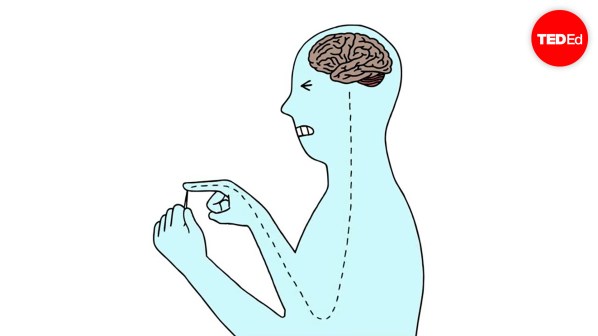
Desensitization is an exposure based therapy that helps diminish negative physical and emotional reactions to stimuli. Seattle Children’s Hospital says, “Often times with chronic nerve pain, a cycle develops between decreasing function and higher levels of pain (this is called the pain-function cycle). Desensitization techniques help break that cycle. They provide the brain with different sensations which then begin to be processed more normally.” Basically, in chronic pain patients, desensitization is used on the affected areas to help decrease the pain response to touch, shoes, massages, towels, vibration, water, temperature, rocks, sand, lotion, putty, brushes, etc., and the negative emotional response attached to it. Though these stimuli may still feel uncomfortable to the affected area even with intense and lengthy desensitization therapy, the main goal is to help normalize the sensation as much as possible. Because yanking your foot away from water or screaming when someone brushes it is not normal.
Pacing: The MOST Important Part of Dealing with Chronic Pain or Life in General
Pacing is an extremely important part of living a life with chronic pain, whether you have CPS, CRPS, AMPS, Fibromyalgia… To be honest, this practice is important for everyone, even those who don’t experience pain.
Pacing is doing something at a steady pace in order to prevent burning out. Whether you are pacing yourself during a soccer game, at the office, or during school. Everyone has had that one day where they overexerted themself. That one day where they probably felt like awful after because they were so tired. For those of us with chronic pain, we are advised against “pushing through.” Yeah, I definitely could make it the whole school day without taking a break, without allowing myself to think about or listen to my pain. Been there, done that. But by the time I would get home, I would be done for the night. I would have completely run myself into the ground. Therefore, taking effective breaks, drinking water, completing my Keep Moving Plan (This is a plan that I am encouraged to use when the need arises.), and using distraction techniques is recommended.
Like I said, pacing doesn’t only have to apply to those who should medically practice it. We should all be pacing ourselves. Taking a ten minute transition break between your history and math assignments after school. Setting aside an hour to take part in a pleasant activity during your hectic schedule on the weekend. It’s really not that hard. Over time, it will become second nature.
 What the Health?!
Wow, this post was very eyeopening because I have never even heard of this before. I think you did an amazing job explaining what is it and how it affects everyone who has it. I really loved your passionate voice and how you related it to yourself and things you go through and I think that this post was a really good idea to help spread awareness. It was really great!
LikeLike
Hi Leah!
Thank you for checking out my post! My biggest purpose and hope for writing these blog posts is to help educate even just one person on the topics that I write about because one day, we all may have a family member struggling with something we don’t understand, a classmate who is ill, or a co-worker that is facing an illness we can’t see. Having the smallest inkling about these kinds of diseases, illnesses, and treatments are eye-opening and really put things in perspective while preparing us for the hard conversations we may be forced to have in the future.
Samantha
LikeLike
You do such amazing job at, for lack of a better phrase, “dumming down” the science behind CRPS–so that everyone can understand it. And I love that you share part of your journey in here as well. We could read about it on Wikipedia, but because you share it from your own vulnerable experience, it is so engaging for us readers. Thank you, Sam! 🙂
LikeLike