
From a young age, most children are taught that it is “good” to be happy and “bad” to be sad. The feeling of sadness has always had a negative connotation attached to it. It’s like we, as human beings, are being told from the day we’re born that it’s not okay to be sad and to avoid crying at all costs, unless you are grieving or are in severe pain. Sadness, anger, and nervousness, and other “negative” emotions have always been kept behind closed doors until recently. My question is… why is there this stigma attached to these emotions?
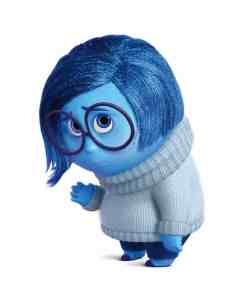
Everyone becomes sad at some point in their life. Sadness is a normal emotion. In that same way, everyone feels happiness at some point in their life, even if they don’t recognize it at the time. However, when sadness, hopelessness, anxiousness, or anger become long-term issues that a person carries through their life, it is necessary to acknowledge these emotions and treat them appropriately. But that’s much easier said than done.
There are many different degrees or levels of the severeness of a mental health issue, and I, as an empathetic person, cannot pretend to understand them all. I can only understand what I know. Due to health issues, I am facing severe clinical depression, anxiety, and symptoms of OCD. A year ago, I would never have admitted that to anyone outside of my family. It seemed as if a diagnosis like that was embarrassing and would make me less of a person (Fact: IT DOESN’T).
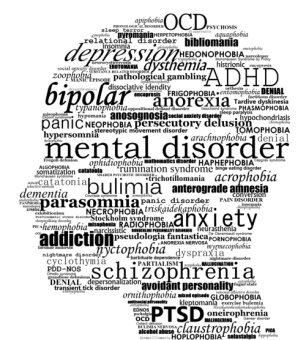
I was reading the article “’It’s nothing like a broken leg’: why I’m done with the mental health conversation” from The Guardian, which was written by Hannah Jane Parkinson, and it really clicked with me. Parkinson described her experience with some severe mental health issues, including a bipolar disorder, and explained how the media glamourizes certain mental health issues but ignores those that are more uncomfortable to talk about. Her perspective on the matter, as someone who faces issues that are not widely talked about, was honestly what I have been waiting to hear for a long time. She says the following:
In recent years the discussion around mental health has hit the mainstream. I call it the Conversation. The Conversation is dominated by positivity and the memeification of a battle won. It isn’t a bad thing that we are all talking more about mental health; it would be silly to argue otherwise. But this does not mean it is not infuriating to come home from a secure hospital, suicidal, to a bunch of celebrity awareness-raising selfies and thousands of people saying that all you need to do is ask for help – when you’ve been asking for help and not getting it. There is a poster in my local pharmacy that exclaims, “Mental health can be complex – getting help doesn’t have to be!” Each time I see it, I want to scream. (paragraph 13)
Parkinson is exactly right. Sometimes, it feels as if the whole world acts as if the battle to end mental health issues has been won. When people talk about depression, anxiety, etc., most say, “You just have to be your ‘happiest you,’ let things go, and enjoy life to its fullest.” Well, what if my ‘happiest me’ is still depressed? What if I can’t “let things go?” (What does that even mean anyway?) What if I can’t enjoy life to its fullest? (Hello?! The glass is half empty, remember…?) The fact is, although some people benefit greatly from going to therapy and taking prescription medicines (or reading positive quotes about life on Pinterest), not all of us do. Just because we go to a doctor and try to “get help” doesn’t mean we are fixed. It’s not a cut. You can’t just put a bandaid on it. So much awareness about several issues has been raised, but what has really been done? I understand depression. I know I suffer from depression. I talked to someone about my depression and asked for help. Almost three years later… what now?
Despite the fact that treatment can sometimes take a while before a person sees effects (I hope…), it is important to be aware of and informed about the most common mental health issues. If not for you, then for a family member or a friend.
Depression
What is it?
Depression is a serious mood disorder that causes prolonged feelings of sadness and causes a person to lose interest and have difficulty performing normal day-to-day activities. Depression affects how a person feels, thinks, behaves, and can lead to several different emotional and physical issues.
Main Symptoms
- Persistent feelings of sadness, hopelessness, and/or emptiness
- Feeling as if things will never get better or change for the good
- Pessimism (always thinking the worst)
- Feeling guilty and/or worthless
- Decreased energy
- Losing interest in activities that were previously enjoyable
- Difficulty with focusing, remembering, and/or making (even the smallest) decisions
- Changes in weight and/or appetite
- Suicidal thoughts/attempts
- Becoming more irritable
- Sleep problems, such as insomnia or sleeping too much
- Aches or pains, headaches, digestive problems, and other medical issues that don’t have a clear physical cause or don’t respond to treatment
Causes
- Biological differences
- Physical changes in a person’s brain
- Brain chemistry
- Hormones
- Inherited traits
- Family history
Risk Factors (What factors make a person most prone to it?)
- Personality traits
- Low self-esteem, pessimistic, self-critical
- Traumatic/Stressful Events
- Abuse, death of a loved one, financial problems
- Family history
- History of other mental health disorders
- Alcohol and/or drug abuse
- Chronic illness
- Cancer, chronic Pain, stroke, heart disease
- Medications
Bipolar Disorder
What is it?
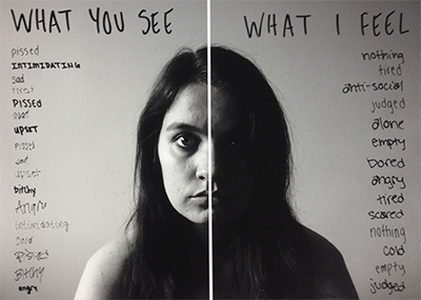
Bipolar disorder is a brain disorder that causes unusual shifts in mood, energy, activity levels, and the ability to carry out day-to-day tasks.
Main Symptoms
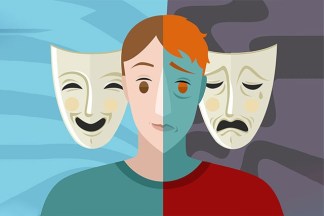
- Periods of unusually intense emotion and unusual behaviors, which are referred to as “mood episodes”
- Extreme changes in energy, activity, and sleep occur along with mood episodes
| People having a manic episode may: | People having a depressive episode may: |
|
|
Risk Factors (What factors make a person most prone to it?)
- Brain structure and functioning
- Genetics
- Family history
Borderline Personality Disorder
What is it?
Borderline personality disorder is a mental illness that includes a continuous pattern varying moods, self-image, and behavior.
Main Symptoms
- Mood swings
- Uncertainty about purpose in life
- Viewing things in extremes
- Strong efforts to avoid physical and emotional abandonment
- Avoid making attachments with other people for fear of them leaving
- Patterns of unstable relationships
- Distorted self-image
- Impulsive, dangerous, and/or self-harming behaviors
- Intense anger
- Difficulty trusting others
- Feeling disconnected from oneself

Causes
The cause of borderline personality disorder is not yet clear.
Risk Factors (What factors make a person most prone to it?)
- Family history
- Brain structure
- Environment, cultural, and social factors
Anxiety
What is it?
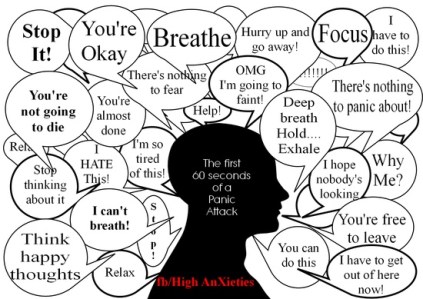
Anxiety is a nervous disorder in which a person experiences excessive uneasiness, apprehension, and stress. People with anxiety typically also have compulsive behaviors and/or panic attacks.
Main Symptoms
| Generalized anxiety disorder:
People with generalized anxiety disorder have excessive anxiety or worry about several aspects of their life. This anxiety and fear can cause difficulty in areas of life, such as relationships, school, and work. |
|
| Panic disorder:
People with panic disorder have panic attacks that can occur at any time, but can specifically occur in response to an object, situation, or a specific environment. |
|
| Phobia-related disorders:
A phobia is an extreme fear of a specific object or situation. EXAMPLES:
|
|
Risk Factors (What factors make a person most prone to it?)
- Shyness
- Traumatic childhood events
- Family history
- Physical medical conditions
OCD (Obsessive Compulsive Disorder)
What is it?
OCD is a chronic disorder that causes a person to have thoughts (obsessions), which they cannot control and occur frequently, and behaviors (compulsions) that they feel the need to complete repeatedly.
Main Symptoms
- Not being able to control excessive thoughts/behaviors
- Spending at least 1 hour on these thoughts/behaviors
- Feeling brief relief from anxiety of thoughts by completing behavior
- Experiencing problems in life due to these thoughts/behaviors
| Common Obsessions: | Common Compulsions: |
|
|
Causes
The cause is unknown.
Risk Factors (What factors make a person most prone to it?)
- Genetics
- Brain structure and functioning
- Environment
- Childhood trauma
- PANDAS
- Pediatric Autoimmune Neuropsychiatric Disorders Associated with Streptococcal Infections
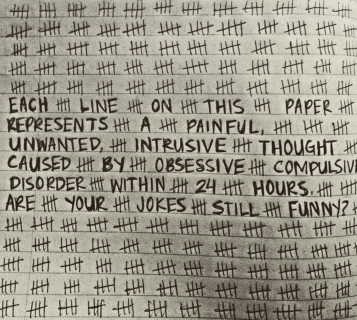
NOTE: OCD is NOT an adjective that should be used to describe someone who is meticulous and detailed. That’s just not what it means. OCD is a mental illness. Phrases like “I am so OCD” or “Be a little more OCD” can be offensive to people with the condition because it sounds demeaning to sum up the agony a person with the illness goes through each day fighting or giving into their urges by describing your perfectionist of a best friend as “so OCD” because she is a try-hard. Well, maybe she is just an overachiever?! My point is, there are many other words that can be used in the situation other than labeling someone with a mental health disorder. Sometimes, we do it without realizing it. I am not innocent, but now that I have more experience with these types of situations, I know how frustrating it can be to feel like someone is misunderstanding what you are going through. Just be careful and think before you speak. Every little thing you say, although you may not think it is a big deal, can affect someone else’s life.
To learn more, click the link below…
PTSD (Post Traumatic Stress Disorder)
What is it?
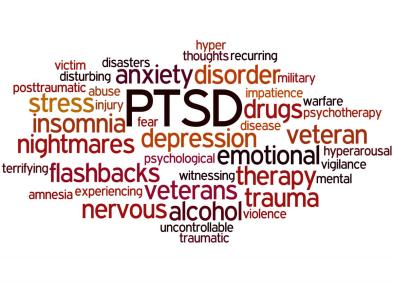
PTSD is a disorder that develops in some people who have been through a traumatic event.
Main Symptoms
Re-Experiencing Symptoms:
|
|
Avoidance Symptoms:
|
|
Arousal and Reactivity Symptoms:
|
|
Cognition and Mood Symptoms:
|
|
Risk Factors (What factors make a person most prone to it?)
- Dangerous events/traumas
- War
- Getting hurt
- Seeing another person hurt
- Childhood trauma
- Loss of a loved one
- Loss of a job or home
- History of mental illness or substance abuse
Works Cited
Parkinson, Hannah Jane. “‘It’s nothing like a broken leg’: why I’m done with the
mental health conversation.” The Guardian, 30 June 2018. The Guardian,
www.theguardian.com/society/2018/jun/30/nothing-like-broken-leg-mental-health-
conversation. Accessed 4 Dec. 2018.
Mayo Clinic Staff. “Depression (major depressive disorder).” Mayo Clinic, Mayo
Foundation for Medical Education and Research, http://www.mayoclinic.org/
diseases-conditions/depression/symptoms-causes/syc-20356007. Accessed 4 Dec. 2018.
“Health Topics.” National Institute of Mental Health,
http://www.nimh.nih.gov/health/topics/index.shtml. Accessed 4 Dec. 2018.
 What the Health?!
I really enjoyed reading this blog post. I like how you explained how society tends to glance over mental disorders today. I was also interested in learning about the different types of mental health disorders and their definitions, symptoms, and causes.
LikeLike
I’m glad you liked it! Thanks for stopping by 🙂
LikeLike